Purity Test: Every Version, From 1924 to the 2,000-Question Book
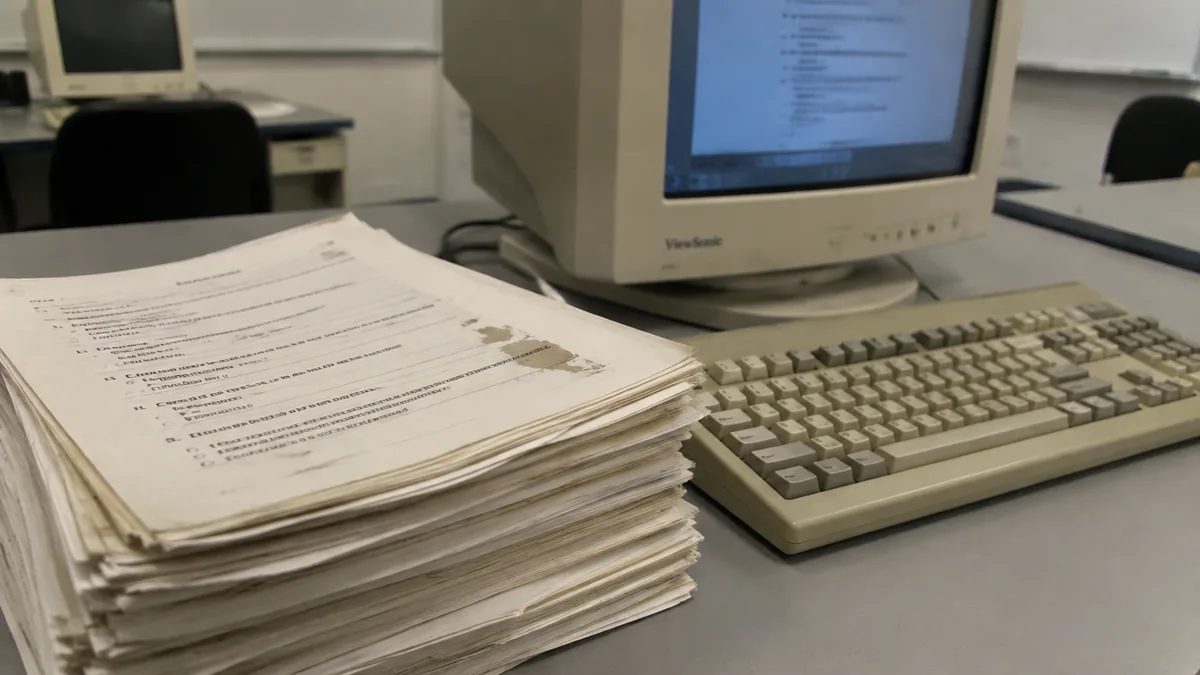
A purity test is a list of yes/no questions you grade yourself: tick everything you have done, take the ticks away from the total, and what is left is your "purity" as a percentage. That is the whole machine. The length swings from 10 items to 2,000, but the joke never moves. The best-known one right now is the 100-item Rice Purity Test, which takes about three minutes on our homepage. This page covers all the others.
In 11 years of running freshman orientation, I heard the same lounge debate every August. Someone's cousin once did a 500-question one. Someone else swears the original was a 1920s sex survey. Both are roughly right. Here is what is documented, and where the folklore takes over.
What a purity test actually is
A purity test is a self-scored questionnaire of yes/no items about romance, sex, drinking, drugs and breaking rules. Every yes costs points, and the remainder is your purity. Nobody has ever validated one as a psychological measure. It is a parody of a questionnaire, and folklorists have filed it that way since the 1970s.
That is the real purity test meaning. In 1975 the folklorists Alan Dundes and Carl R. Pagter published Work Hard and You Shall Be Rewarded, a collection of the lists and memos people copied around offices and campuses, and they put purity tests in a genre they called the "questionnaire parody". The form borrows the look of an official survey (numbered items, a scoring rule, a percentage) and fills it with questions no registrar would ask. That gap is the joke, and it is why people take the number more seriously than its authors did.
Was there a virtue test before the purity test?
Yes, and only the name differs. Dundes and Pagter reprinted a "Virtue Test" that circulated at Indiana University in 1939. It sits in a cluster of 1930s campus tests: Columbia's humor magazine The Jester ran one conducted at Barnard College in 1935 (the October issue was briefly censored), and in 1936 University of Toronto students took a 20-question version that docked marks for smoking, drinking and kissing. Kissing. The 1930s ceiling is where modern tests begin.
The oldest documented ancestor is a March 1924 Rice Thresher survey of 119 female students: 10 questions, 10 points each, average 62. Only 4 of the 119 had ever been drunk. It was a newspaper survey, not a party game.
What was the Caltech purity test?
The Caltech purity test is the "Official Purity Test" that circulated at the California Institute of Technology and was reprinted by Dundes and Pagter in 1975. Past that, the trail goes thin. I couldn't find a dated original or a reliable copy of its questions, so I won't guess its length. One later clue: an index of purity-test files forwarded by email in October 1993, still on an MIT server, lists a "Dabney House Purity Test (CalTech)".
Every purity test version, side by side
This table lists only versions whose details trace to a newspaper, a book or the test's own printed notes. Where a detail isn't documented, the cell says so. There are a lot of those cells, and that is the honest state of the record.
| Version | Era | Questions | Scoring | Where it lived |
|---|---|---|---|---|
| Rice Thresher survey | 1924 | 10 | 10 points each; average 62 across 119 women | Rice Thresher (Rice University) |
| Barnard purity test | 1935 | Not documented | Not documented | The Jester, Columbia humor magazine |
| Toronto purity test | 1936 | 20 | Marks lost for smoking, drinking, kissing | University of Toronto |
| Indiana "Virtue Test" | 1939 | Not documented | Not documented | Indiana University; reprinted by Dundes and Pagter (1975) |
| Caltech "Official Purity Test" | Before 1975 | Not documented | Not documented | Caltech; reprinted by Dundes and Pagter (1975) |
| MIT version 1 (male and female) | Before 1982 | 100 each | Not documented | MIT's Baker House, per the unisex test's notes |
| Unisex purity test, version 2 | Spring 1983 | 247 | Not documented | Carnegie Mellon, per the test's notes |
| Unisex, Omnisexual Purity Test 4.0 | April 1988 | 500 | (500 minus yes answers) ÷ 5 = % pure | Credited to Yale and Dartmouth students; spread by email and Usenet |
| Rice Thresher Backpage test | 1988 | 100 | 1 point each; add two points if you don't understand a question | Rice Thresher |
| Linder's The Purity Test | 2009 | 2,000 | Book format | St. Martin's Griffin (Macmillan) |
| Rice Purity Test (current) | 2012 to today | 100 | 100 minus the number ticked | Thresher Backpage; ricepuritytest.com |
Source: Rice Thresher, "Purity Test evolves, spreads beyond Rice" (Aug 23, 2017); Wikipedia's "Purity test" article and its cited sources; the version notes printed in the 500-question unisex test.
What is the 500 question purity test?
The 500 question purity test is the "Unisex, Omnisexual Purity Test", version 4.0, dated April 23, 1988 in its own notes. It carries a version history like software. Version 1 was a pair of 100-question tests, male and female, from MIT's Baker House. Version 2, at Carnegie Mellon in spring 1983, grew to 247 questions and became the first unisex purity test. A 400-question release followed in 1984 (a 1985 revision admits it actually had 431), and students at Yale and Dartmouth pushed it to 500. Scoring: count your yes answers, subtract from 500, divide by 5. One caveat: these are the test's own notes, and I couldn't check them against anything independent.
Is there really a 2000 question purity test?
Yes, in print. Joselin Linder's The Purity Test: Your Filth and Depravity Cheerfully Exposed by 2,000 Nosy Questions came out from St. Martin's Griffin, a Macmillan imprint, in 2009. Her research also supplies two useful dates: purity tests were being shared online by about 1980, and the first web-based one went up in 1994.
The 1993 MIT index lists more than 30 purity tests by file name, from a 70-question "immorality" test up to file names pointing at 1,000 and 1,500 questions, plus a Rice file, a HyperCard version for the Mac and one written to run inside the Emacs text editor. Somebody decided their purity test needed to be a program. Of course they did.
Why the Rice version won
Rice's test won because one newspaper kept looking after it. The Thresher revised it for decades, gave it an official web page, and Rice's O-Week kept it alive every August until TikTok handed it to a new generation. No other purity test had a publisher maintaining it that long.
Start with the edits. The 1988 Backpage version swapped 10 × 10 scoring for 100 items at 1 point each, with the rule "If you don't understand the question, add two points." (Wikipedia says 150 questions; the Thresher's own 2017 retrospective says 100, and I trust the paper that printed it.) It said "MOS", member of the opposite sex, and included questions about sexual crimes. By 1998 those were gone and MOS had become MPS, Member of the Preferred Sex. In 2011 the Backpage editors refused to run it, and in 2012 editors including Anthony Lauriello wrote a fresh version so O-Week groups would stop using older, biased ones. That is the test online today, and the order and scope our 100 questions follow.
Then the web page. ricepuritytest.com logged 1,524,204 visits in the year before August 2017; the paper said it earned more than the Thresher's own website. When a friend says "take the purity test", one stable link wins.
Then the ritual, which cuts both ways. On "Dis-Orientation" day 2017, Houston tests jumped to 274 from about 100 on a typical day, averaging 65. But one Rice college's O-Week banned the test in 2005 over harassment concerns, Jones College banned it in 2017, and Will Rice advisors used their Healthy Relationships talk to warn it is not a checklist. I've given that talk. First-years laugh, then they listen. The rest is on our Rice Purity Test history page.
Finally, TikTok. Gen Z rediscovered the test in the early 2020s, and The Independent covered the trend. A 100-question test fits in a three-minute video. A 500-question one is an evening.
Rice purity test similar quizzes and spin-offs
Most quizzes now called a "purity test" are spin-offs that borrow the Rice format (a checklist, a score out of 100, a shareable number) for something else. A few stay near the original subject. Many have nothing to do with sex; the name just signals "tick boxes, get a number". If you want rice purity test similar quizzes in the original spirit, the table above is the real family.
What is the AO3 purity test?
The AO3 purity test is a fan-made spin-off for fanfiction readers and writers, named after Archive of Our Own, the big fan-fiction archive. As far as I can tell it is a self-scored checklist of tropes, pairings and explicit content you have read or written. It is not an official AO3 feature, and I found no authoritative version, so there is no fixed question count to report.
Can you use a purity test maker to build your own?
You don't need a purity test maker; a notes app will do. Every version on this page began as somebody's homemade list. Keep items yes/no, score 1 point each, and leave out anything describing a crime against another person (the Thresher cut those by 1998). Share the list, never other people's answers.
Longer tests aren't more accurate
A 2,000-question purity test doesn't measure you better than a 100-question one. None of these tests measures a defined trait, so adding items adds detail and laughs, not precision. The 2,000-question book is a party book, not a sharper instrument.
A real measurement starts by defining what it measures and checking that the questions track it. No purity test has done that, and I know of no study linking anyone's score to anything. Every item also counts the same: on the Rice list, holding hands costs as much as a felony conviction. Stretch the list to 2,000 and you mostly add variations on the same acts, which piles weight onto sex.
Rice's real advantage isn't quality. It's that millions of people answer the same 100 items, so a number means something when you compare it. Even then, the Thresher publishes no official meanings; our guide to Rice Purity Test score meaning is clear about which parts are interpretation. And from someone who watched a lot of 18-year-olds compare scores: these tests count opportunities as much as choices. A longer list just counts more of them.
Frequently Asked Questions
What does purity test mean?
A purity test is a self-graded checklist of yes/no questions about romance, sex, alcohol, drugs and rule-breaking. You tick what you have done, subtract the ticks from the total and read the remainder as a purity percentage. The word purity is meant ironically. Folklorists Alan Dundes and Carl R. Pagter described these tests in 1975 as questionnaire parodies: jokes dressed up as official surveys. None has been validated as a measure of anything, so the number is a conversation piece, not a verdict.
Is the Rice Purity Test the original purity test?
Not quite. The oldest documented ancestor is a 10-question survey of 119 female students printed by the Rice Thresher in March 1924. But purity tests also appeared at Barnard in 1935, Toronto in 1936 and Indiana in 1939, and a separate line of long tests started at MIT and Carnegie Mellon. The Rice Purity Test people take today is a 100-question version written by Thresher Backpage editors in 2012, replacing earlier Rice versions from 1988 onward. It is the most famous purity test, not the only original.
What is the longest purity test?
The longest documented one is Joselin Linder's 2009 book The Purity Test, subtitled Your Filth and Depravity Cheerfully Exposed by 2,000 Nosy Questions, published by St. Martin's Griffin. Before that, the best-known long test was the 500-question Unisex, Omnisexual Purity Test from 1988. An index of purity-test files emailed around in 1993 also lists file names suggesting 1,000- and 1,500-question versions. Length is mostly a stunt; the 100-question Rice version is the one people finish.
What is the unisex purity test?
The unisex purity test is a long purity test that dropped the separate male and female versions of earlier tests. According to version notes printed in the test itself, the unisex edition began at Carnegie Mellon in spring 1983 with 247 questions, grew to 400 by 1984, and reached 500 questions in version 4.0, dated April 1988 and credited to students at Yale and Dartmouth. You count your yes answers, subtract from 500 and divide by 5. Those notes were never independently confirmed.
What is the AO3 purity test?
The AO3 purity test is a fan-made checklist for fanfiction readers and writers, named after Archive of Our Own, the large fan-fiction archive. It borrows the Rice format, a list you tick for a score, but the items cover fandom habits such as tropes, pairings and explicit stories read or written. It is not an official Archive of Our Own feature, and no single authoritative version exists, so question lists and counts differ between copies.
Can I make my own purity test?
Yes, and you need no special software or purity test maker. Every historical version began as a homemade list. Keep each item a simple yes or no, give each one point, and score it as the total minus the yes answers. Leave out items describing harm to another person, which the Rice Thresher removed from its own version by 1998. If you share your test in a group, share only the questions and let everyone keep their answers and score private.